2 System Shifts
I. Indigenous Leadership: When Ancestral Knowledge Guides Transformation 🌿
A landmark study published in Nature analysed 127 biocultural initiatives across Ecuador, Peru, and Colombia, revealing six distinct types. Three clusters, termed "I-Seeds", demonstrate particularly high transformative potential: Empowering, Reconnecting people and nature, and Intercultural and ancestral education.
What distinguishes these Indigenous-led initiatives is not merely inclusion, but centering: Indigenous and Local Knowledge anchors decision-making through knowledge co-design processes, where IPLC lead from inception. These I-Seeds implement "scaling deep" strategies that shift underlying values and worldviews, rather than simply expanding operations. All operate from relational values, understanding nature as an interconnected web where humans and non-humans are bound in reciprocal relations.
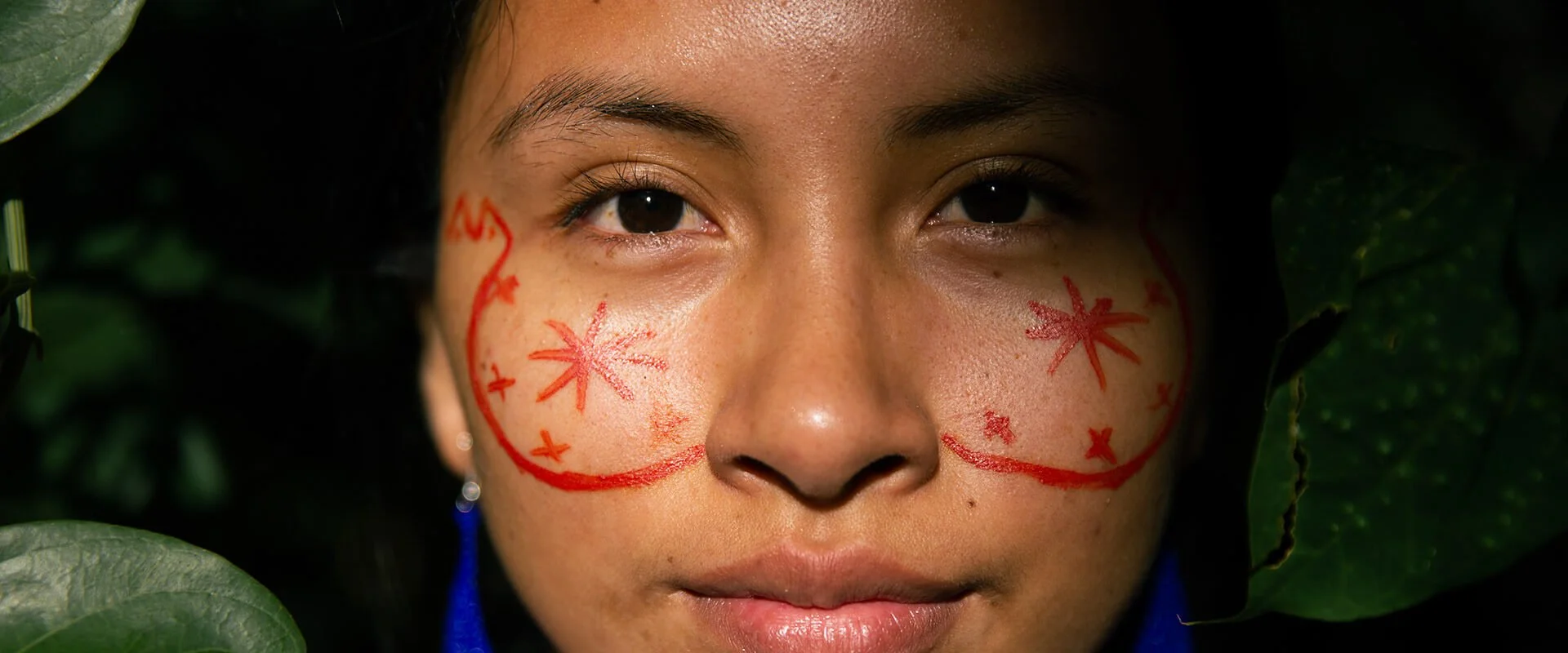
The "Ikiama Nukuri" initiative exemplifies this approach, empowering Achuar women in Ecuador's Amazonia as community health workers whilst reducing maternal mortality and strengthening entire communities. The initiative builds infrastructure independently, expands organically, and became the region's first women-led endeavour.
Whilst representing 5% of global population, Indigenous Peoples influence land management across 28% of Earth's surface, covering 40% of all terrestrial protected areas. The research reveals that transformative potential emerges when Indigenous knowledge shapes, not merely informs, sustainability pathways.
The Shift: Sustainability transformations accelerate when Indigenous communities lead with ancestral knowledge at the core, not the periphery. When knowledge co-design processes honour Indigenous worldviews of reciprocity and "Living in Harmony with Nature", initiatives catalyse profound shifts in paradigms that ripple beyond projects to transform entire systems. 🌲🪶
II. Digital Climate Action: When Technology Equips Nations for Response ⚡
At COP30, the Green Digital Action Hub launched as a platform to harness technology for climate solutions, whilst the AI Climate Institute began operations to equip developing nations with capacity to design AI-based climate strategies. Anchored in Brazil, the hub provides tools, expertise, and data to help nations scale green technologies whilst reducing technology's own environmental footprint.
The hub maps national green digital targets, supports innovation transfer, and serves as implementation hub for the Digital Decarbonization Plan. The AI Climate Institute, co-led by ITU, UNESCO, and Brazil's Anatel, builds on a successful pilot in Belém demonstrating AI-driven solutions for developing regions. These initiatives acknowledge AI's dual nature: offering powerful climate tools whilst requiring clean energy to operate sustainably.
The Shift: Digital climate action evolves to coordinated infrastructure as nations build hubs for technology transfer and capacity building. When platforms explicitly centre Global South innovation whilst addressing technology's environmental footprint, digital tools become instruments of climate justice rather than exacerbating inequalities. 🌐💫
What if transformation requires that we weave ancestral wisdom with contemporary technology and tools, honouring both roots and innovations? 🌱
3 Field Stories
I. Colombia: Where Urban Air Transforms 🌆
Between 1998 and 2005, Bogotá's air quality reached crisis levels, with particulate matter seven times higher than WHO limits. Two decades later, the Colombian capital has won the Earthshot Prize for Clean Our Air, recognised globally for cutting pollution by 24% since 2018 whilst redesigning how 8 million residents move and live.
The transformation required coordinated action across transport, freight, and green infrastructure. Bogotá invested $19.9 billion in sustainable mobility, air quality and green public space: over 100 kilometres of low-emission bus lanes, one of the world’s biggest electric bus fleets at over 1,400 buses, Latin America's largest cycle network, three cable-car lines, and a metro line opening 2028. The Urban Zone for Clean Air in Bosa, a highly polluted low-income district, integrates freight renewal, road paving, expanded green areas, and safer cycling, ensuring clean air benefits reach those who need it most. The city has planted thousands of trees and created urban gardens, green roofs, and urban forests.
Mayor Carlos Fernando Galán emphasised: "This prize recognises the efforts of an entire city, several administrations and many people, who for many years have worked to innovate so all those who live in Bogotá can breathe better air." By 2028, Bogotá expects to avoid over 300,000 tonnes of CO₂ annually, equivalent to preserving a forest ten times Manhattan's size.
The Impact: The £1 million prize enables a second low-emission zone in 2026 and a replication blueprint for ten cities globally. Bogotá demonstrates that coordinated action across transport and green infrastructure can transform urban air quality even as populations grow. 🚲
II. Brazil: Where Rocks Become Carbon Capture Through AI 🪨
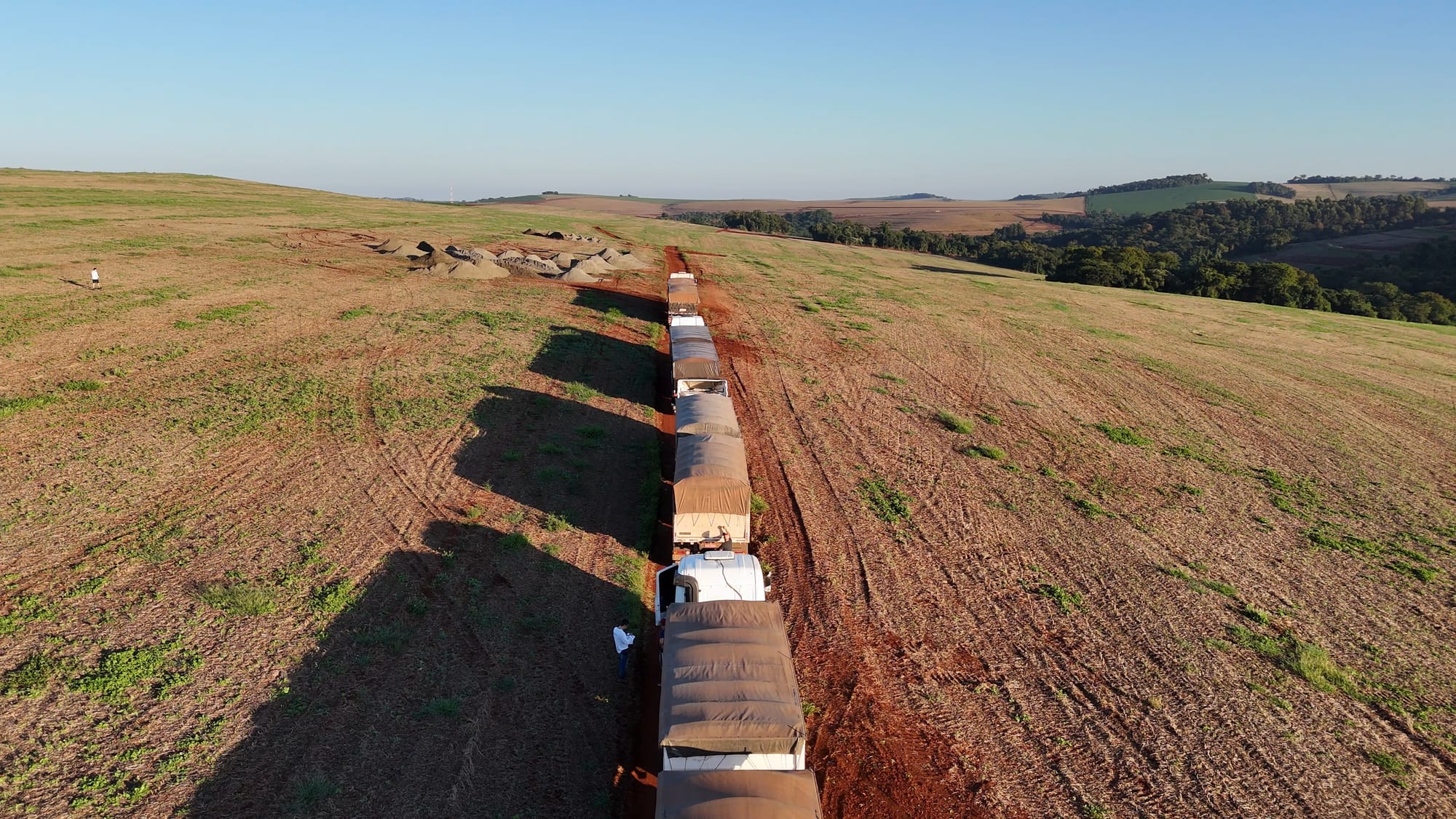
In Brazil's vast agricultural landscapes, Terradot is pioneering enhanced rock weathering, accelerating a natural process where rocks capture atmospheric carbon whilst improving soil health. The technology applies crushed silicate rocks to farmland, where they react with CO₂ and rainfall, storing carbon permanently as it travels from soil to ocean. What nature accomplishes over millennia, Terradot optimises for agricultural timescales.
The innovation lies in combining ancient geology with contemporary intelligence. As a member of Google's AI for Nature Accelerator, Terradot leverages AI models to predict and optimise carbon removal in specific locations, processing vast environmental data from soil quality to weather patterns. Google Earth Engine integrates remote sensing data for geospatial modeling, whilst AI monitors and verifies how much carbon is permanently stored.
Backed by Frontier, an advance market commitment to accelerate carbon removal co-founded by Stripe, Alphabet, Shopify, Meta, and McKinsey, Terradot represents one of more than 20 emerging carbon removal technologies the coalition supports. The approach targets gigaton-scale potential: if successful at scale, enhanced rock weathering could remove massive amounts of CO₂ whilst strengthening Brazil's agricultural soils simultaneously.
The Impact: Terradot demonstrates how AI transforms enhanced rock weathering from theoretical potential to measurable climate solution. By turning environmental data into actionable insights for carbon removal and soil optimisation, the platform proves that breakthrough technologies combining natural processes with machine intelligence can unlock pathways to permanent carbon storage. 🌾
III. Japan: Where Citizen Eyes Become Biodiversity Intelligence 🦋
Biome Inc., one of Japan's largest biodiversity databases, transforms everyday observations into ecological insight. Since 2019, over 6.5 million species sightings flow through the mobile app, covering 100,000 species across Japan's islands.
The breakthrough lies in blending data sources. Traditional surveys required over 2,000 records to map endangered species accurately; adding citizen observations reduced this to just 300 records. AI-powered identification through image recognition and ecological analysis learns continuously as observations accumulate.
Biome now supports over 400 projects; companies assessing nature risks, governments mapping biodiversity, organizations pursuing nature-positive targets. This year, companies partnered with Biome to estimate vegetation and species distribution using satellite data, scaling citizen science to corporate strategy.
The Impact: With high accuracy on species identification for birds, reptiles, mammals, and amphibians through community-powered AI, scattered sightings become strategic intelligence. Japan demonstrates how making biodiversity observation accessible and AI-assisted transforms millions of moments of curiosity into infrastructure for protecting nature. 🦌
Emerging Pattern
From Indigenous communities leading with ancestral wisdom to digital platforms equipping nations with climate tools, from cities transforming urban air to rocks enhanced by AI capturing carbon to databases powering strategic decisions, a pattern crystallises: transformation scales when technology amplifies rather than replaces community knowledge, when infrastructure serves justice rather than perpetuating inequality, when natural processes merge with machine intelligence to accelerate healing. ✨
1 Mindful Moment

""Forest bathing will help you unplug from technology and slow down, bringing you into the present moment." — Dr Qing Li, author of Forest Bathing: How Trees Can Help You Find Health and Happiness
These are trails in my hometown, and throughout the years, I've learnt to walk these trails not for the view at the summit, but for what happens when I immerse myself fully in between the trees.
The Japanese call this shinrin-yoku—forest bathing. Not hiking toward achievement, but receiving what forests freely offer. The practice asks nothing except presence. No performance, no productivity, no proof. Simply being among trees that have mastered growing slowly, breathing deeply, standing rooted whilst reaching skyward.
One invitation: This week, find trees near you. Any trees. Set aside time without an agenda. Walk slowly, or simply stand. Let your senses open to receiving. The forest may not be teaching you anything new; but it will remind you of what you already know. What does the forest know about peace that you've forgotten? 🌲✨